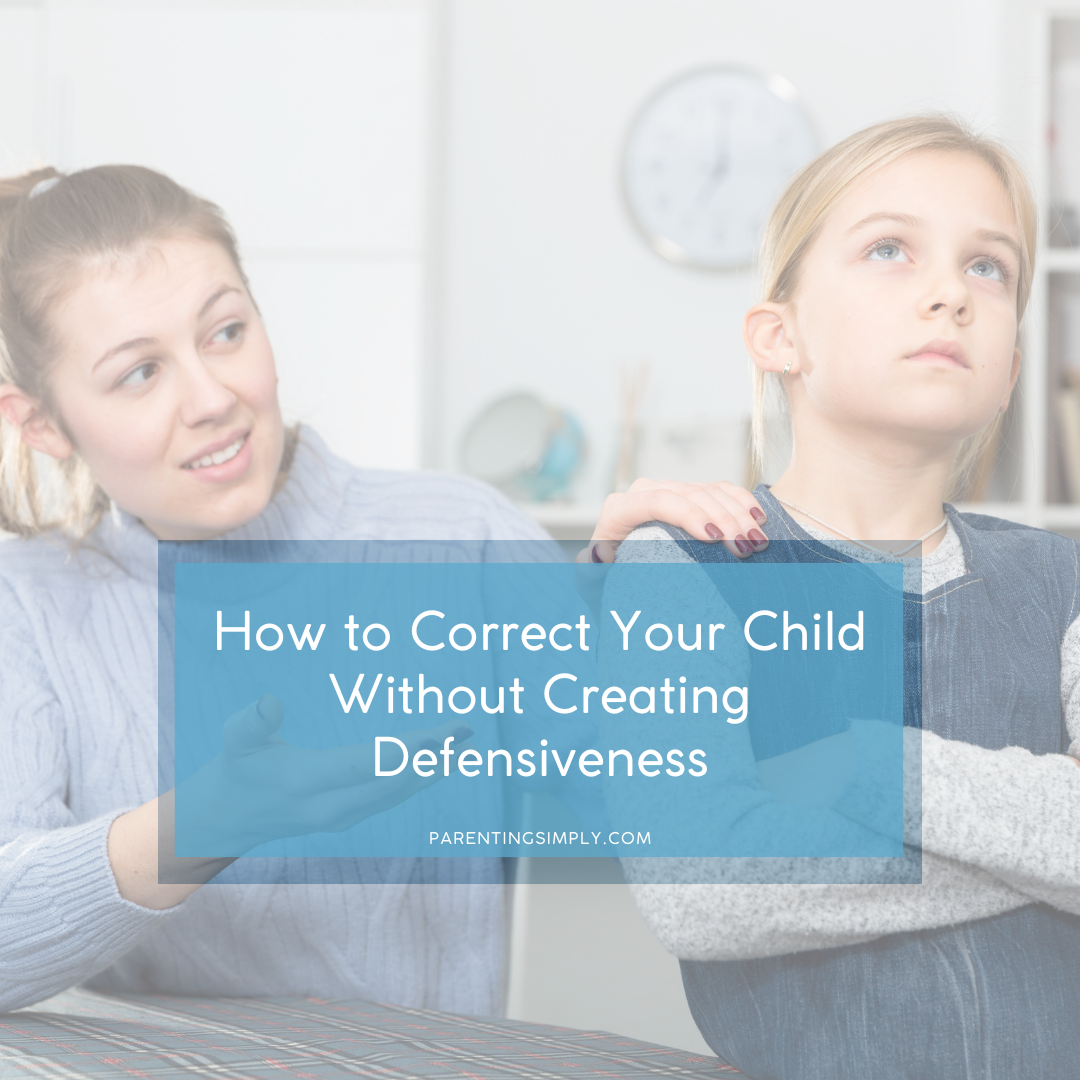

Correcting Children Without Hurting Their Feelings
Correcting children without criticism can feel challenging for many parents. Anytime we need to guide our children’s behavior, we need to be especially sensitive. Most children do not enjoy being criticized — even when correction is gentle and well-intentioned. What may feel like a small reminder to a parent can feel like negative feedback to a child.
A parent might casually say:
- “Remember to brush your hair.”
- “Chew with your mouth closed, cutie.”
Even though these comments are mild, a child may still experience them as criticism. Children are highly sensitive to how they are spoken to, especially by the people whose approval matters most to them.
A parent’s goal when correcting behavior is not simply to point out what is wrong. The goal is to help children improve while preserving the relationship and protecting their self-esteem. When children feel ashamed, attacked, or defensive, they are far less motivated to change. But when they feel respected and understood, they are much more open to listening and cooperating.
The real secret to helping children improve their behavior often lies in how we approach them. Here are several ways parents can make correction feel more respectful, productive, and positive.
1. Correcting Children Without Criticism Starts With Calm Conversations
Both you and your child should be calm before starting an important conversation. Very little learning happens when emotions are running high. When parents discipline in anger, they often say things they later regret. Children may respond by yelling, shutting down, crying, or becoming defensive.
Children are far more receptive when they feel emotionally safe and relaxed. Sometimes a quiet conversation during a calm moment — over a snack, during a car ride, or before bedtime — can make all the difference.
A heart-to-heart conversation in a peaceful setting helps children truly hear and absorb what we are trying to say.
2. Start the Conversation Gently
The opening words of a conversation can either invite cooperation or trigger defensiveness.
Children naturally become guarded when they hear statements like:
- “You need to start working harder in school. Your grades are slipping.”
- “You were really mean to your sister.”
- “What is going on with your attitude lately?”
Even more neutral comments like:
- “We need to talk about your schoolwork.”
- “What’s going on between you and your sister?”
can feel intimidating to sensitive children.
Instead, try easing into the conversation in a respectful and collaborative way.
You can:
- Ask if it is a good time to talk
- Invite your child’s opinion
- Describe the problem neutrally rather than blaming
For example:
- “Can we talk for a minute? I’d love your help thinking through something.”
- “I want to hear your thoughts about what’s been happening lately.”
- “There seems to be a lot of tension in the house. What do you think might help?”
- “I’ve been thinking about school lately and wanted to check in with you. Is now a good time?”
When children feel included instead of accused, they are much more likely to open up and engage in the conversation.
3. Talk About Yourself Too
Another powerful approach is to begin by acknowledging your own struggles instead of immediately focusing on your child’s mistakes.
For example, a parent might say:
“I know I sometimes get frustrated about table manners, but honestly, I don’t always have perfect manners either. Sometimes I rush through meals or forget to slow down. I think maybe our whole family could work on being more polite at the table.”
When parents acknowledge their own imperfections, children feel less alone and less ashamed. They begin to realize:
“I’m not the only one who struggles. Even adults are still learning.”
This creates connection instead of defensiveness, which makes children much more willing to listen and grow.
4. Focus on Growth, Not Perfection
Children do better when they feel that mistakes are part of learning rather than proof that something is wrong with them.
Instead of saying:
- “Why are you always so messy?”
try:
- “Let’s think together about how to make cleanup easier.”
Instead of saying:
- “You never listen.”
try:
- “I notice it’s hard to remember directions sometimes. What might help?”
Small shifts in language can help children feel encouraged rather than criticized.
Final Thoughts
Correcting children without criticism is one of the hardest parts of parenting, especially when emotions are running high. Of course parents need to guide behavior and teach important life skills. But how we communicate matters just as much as what we say.
When parents stay calm, approach conversations gently, and speak with empathy and respect, children are far more likely to listen, cooperate, and make positive changes.
This approach may take a few extra minutes in the moment, but it often prevents hours of power struggles, hurt feelings, and conflict later on.
You can learn more in my book, Parenting Simply: Preparing Kids for Life, filled with practical parenting tools you can use right away.
Or, if you are looking for step-by-step guidance to become a calmer, more confident parent, check out my online course, Simple Ways to Parent Without Anger.
Did you hear? I have a new podcast! Simply Jewish Parenting. Subscribe here!