

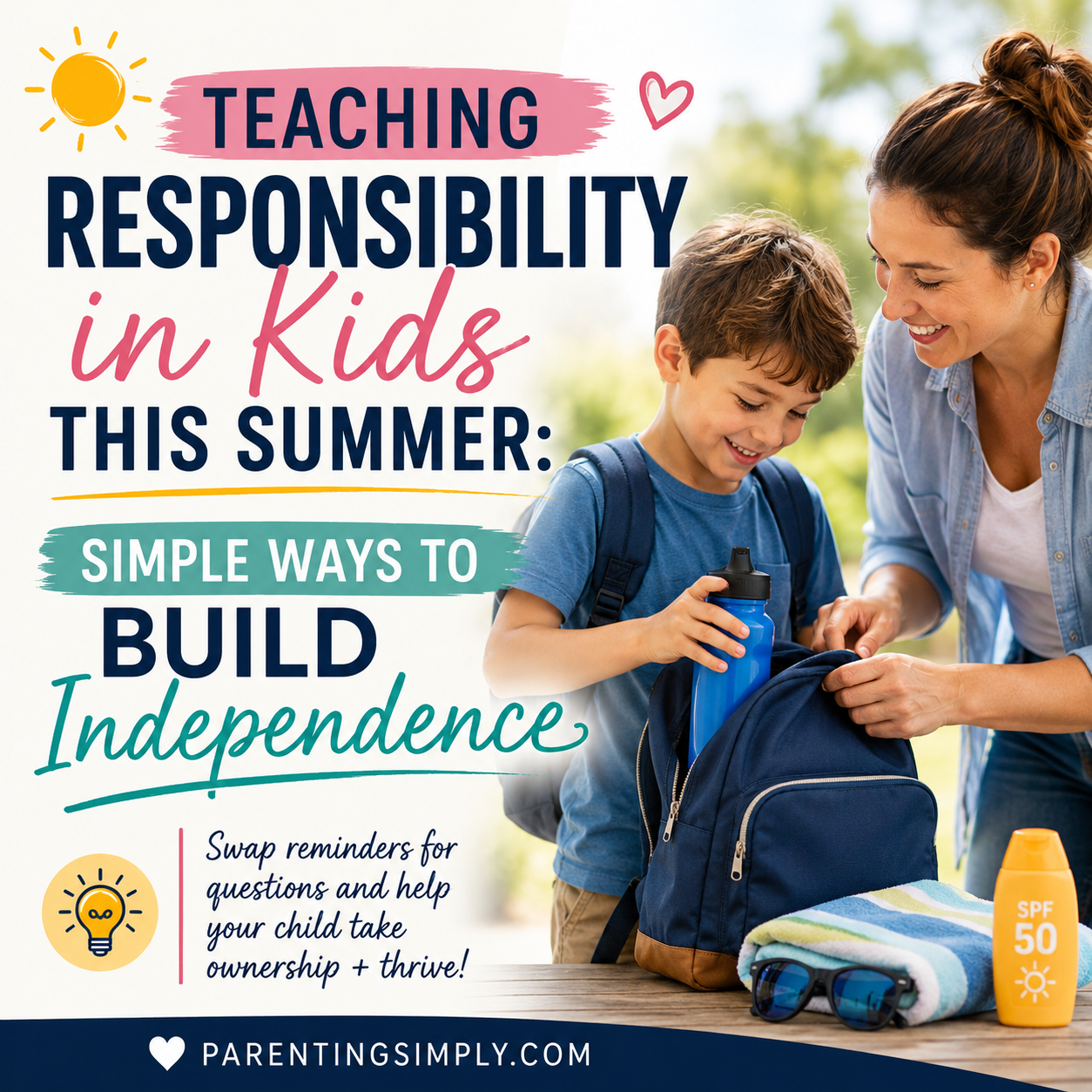
 Teaching Responsibility in Kids This Summer: Simple Ways to Build Independence
Summer is the perfect time for teaching responsibility in kids.
During the school year, many responsibilities are assigned to our children. Teachers tell them when assignments are due, what materials they need, and how to stay organized. But summer offers something different—a chance for children to practice taking responsibility for themselves.
Without the structure of school, it can be tempting to remind, direct, and supervise every step of the way. Yet one of the best ways of teaching responsibility in kids is to step back and help them think through problems on their own.
Why Summer Is the Perfect Time for Teaching Responsibility in Kids
Summer naturally creates opportunities for children to practice important life skills.
Children can learn to:
- Pack their own camp bags
- Keep track of sports equipment
- Remember water bottles and towels
- Manage summer reading
- Prepare for sleepaway camp
- Help with household chores
- Take care of personal belongings
These everyday experiences help children build independence, confidence, and responsibility.
According to the Child Mind Institute, children develop executive functioning skills through practice, repetition, and opportunities to manage tasks independently.
Replace Reminders With Problem-Solving Questions
One simple parenting tool can make a big difference: asking problem-solving questions.
Instead of constantly reminding children what to do, encourage them to come up with solutions.
Instead of saying:
“Don’t forget your towel for the pool.”
Try asking:
“What do you need to bring so you’re ready for the pool today?”
Instead of saying:
“Your camp bag is still sitting by the door.”
Try asking:
“What is your plan for getting your camp bag packed tonight?”
Instead of saying:
“You never remember sunscreen.”
Try asking:
“What can help you remember sunscreen before you leave?”
Questions encourage children to think. They gently shift responsibility from the parent to the child.
Teaching Responsibility in Kids Builds Lifelong Skills
When children help generate solutions, they are more likely to follow through.
More importantly, they learn valuable skills such as:
- Planning ahead
- Organizing materials
- Managing time
- Remembering important tasks
- Solving problems independently
The Harvard Center on the Developing Child notes that executive function skills are critical for success in school and throughout life.
The goal isn’t to create perfect children.
The goal is to help children practice responsibility in manageable ways.
What If My Child Still Forgets?
That’s okay.
Learning responsibility is a process.
Children will forget things. They will make mistakes. They may leave a water bottle at camp, forget sunscreen, or realize they packed the wrong item.
Those moments are often where the learning happens.
When we immediately rescue children from every mistake, we sometimes remove valuable opportunities for growth.
Instead, we can stay calm and help them think through solutions.
One Simple Question to Ask Yourself
This summer, before offering another reminder, pause and ask:
“What question could I ask instead?”
You may be surprised by how much responsibility your child is willing to take when given the chance.
Responsibility isn’t something we can force on our children.
It’s something we gradually help them develop—one problem-solving question at a time.
Related Articles
- Read: How to End Power Struggles with Kids (insert ParentingSimply.com link)
- Read: Building Resilience in Kids: Stop Fixing Their Problems (insert ParentingSimply.com link)