

Problem-Solving Questions for Kids: A Simple Way to Build Responsibility
Every parent wants their child to succeed at school. We want our kids to get dressed, eat breakfast, pack their backpacks, complete homework, and get out the door on time.
The problem is that many of us end up sounding like broken records:
“Hurry up!”
“Clean out your backpack!”
“Did you finish your homework?”
“Don’t forget your lunch!”
The more we remind, the more our children seem to tune us out.
One tool that can help is using problem-solving questions for kids instead of constant reminders and lectures.
When children are invited to think through a problem, they are more likely to take ownership of the solution.
Why Problem-Solving Questions for Kids Work
When we constantly direct, remind, and correct, children can become dependent on us to manage their responsibilities.
They may begin waiting for us to tell them what to do instead of learning how to think for themselves.
Problem-solving questions help children:
- Build responsibility
- Develop independence
- Strengthen executive functioning skills
- Learn time-management skills
- Feel capable and trusted
Most importantly, problem-solving questions reduce power struggles because they invite cooperation instead of resistance.
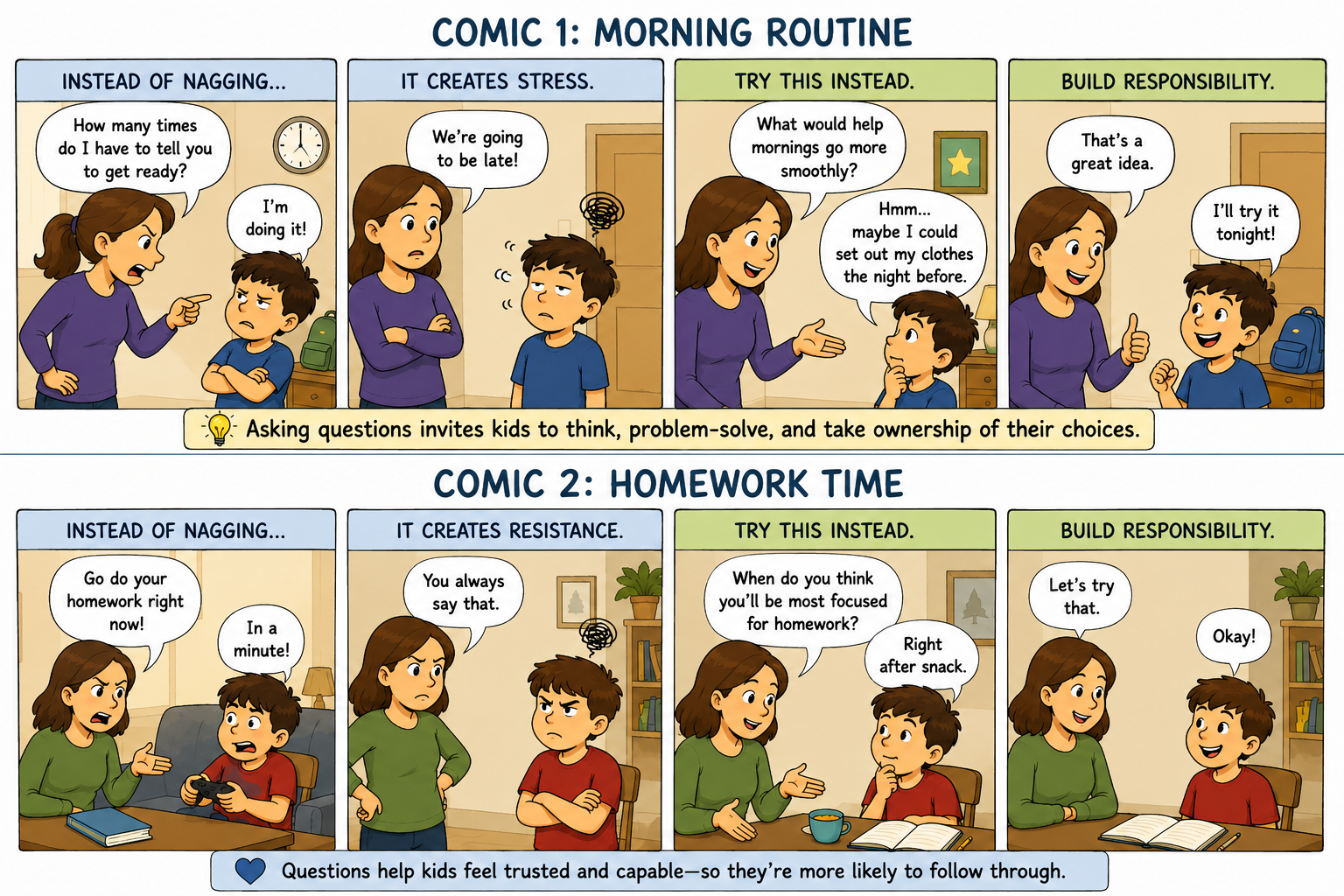
Replace Constant Reminders With Problem-Solving Questions
Instead of saying:
❌ “Your backpack is a disaster. Clean it out.”
Try:
✅ “What system could help you keep your backpack organized?”
Instead of saying:
❌ “Hurry up! You’re going to miss the bus.”
Try:
✅ “What time do you think you need to wake up so mornings feel less rushed?”
Instead of saying:
❌ “Go do your homework.”
Try:
✅ “Where do you do your best homework?”
Instead of saying:
❌ “Don’t forget your lunch again.”
Try:
✅ “What’s a good way to remind yourself to pack your lunch tomorrow?”
 When Should You Use Problem-Solving Questions?
This approach works best when everyone is calm.
The middle of a crisis is usually not the time for a deep discussion.
If your child is already late for school, it is perfectly appropriate to give a clear direction.
Later, when things are calm, you can invite your child into the problem-solving process.
For example:
“Mornings have been stressful lately. What ideas do you have that might help us get out the door more smoothly?”
Now your child becomes part of the solution instead of simply being told what to do.
Helping Kids Take Ownership
One of the biggest gifts we can give our children is the belief that they are capable.
When we ask thoughtful questions, we communicate:
“I trust you to think.”
“I believe you can solve problems.”
“I know you can learn from mistakes.”
That doesn’t mean children will suddenly become perfectly organized.
But over time, problem-solving questions for kids help children become more responsible for their belongings, their schedules, and their schoolwork.
And that means fewer reminders, fewer arguments, and more cooperation.
Try This Today
The next time you’re tempted to remind, lecture, or correct, pause and ask yourself:
“Is there a question I could ask instead?”
You might be surprised by how much more ownership your child takes when they’re invited to think through the problem themselves.
Want to learn more?
Read on here:
👉3 Tips For The New School Year
👉Back to School: Advice for Parents