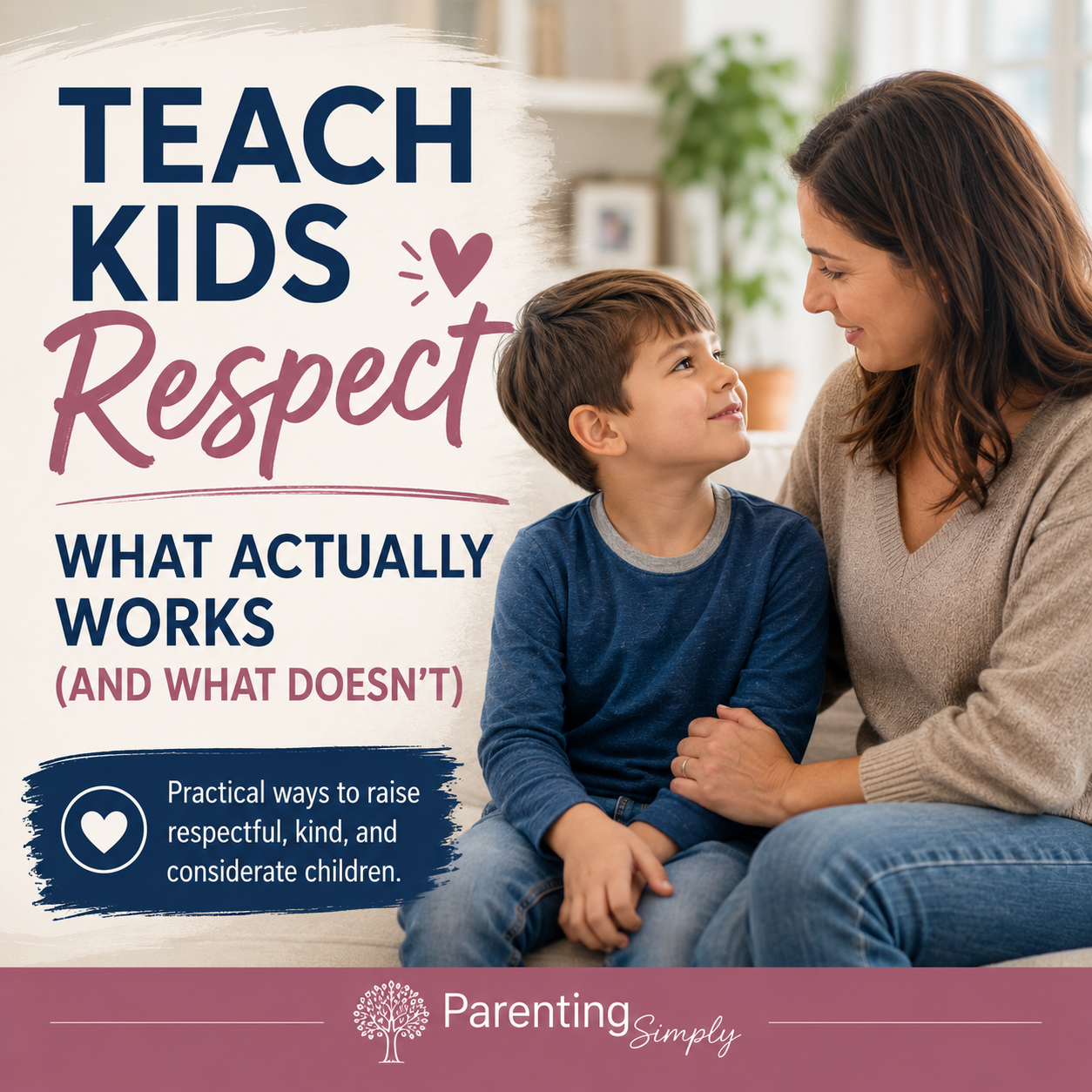
 Teach Kids Respect: What Actually Works (And What Doesn’t)
Many parents worry about respect.
They see children interrupting conversations, rolling their eyes, arguing with adults, or speaking rudely to siblings and wonder:
“How do I teach my child respect?”
When this happens, it is tempting to respond with:
“You need to respect me!”
Unfortunately, demanding respect rarely teaches respect.
In fact, respect is not something we can force.
It is something we teach.
Just as children are not born knowing how to read, tie their shoes, or ride a bike, they are not born knowing how to be respectful. Respect is a skill that develops over time through teaching, practice, and experience.
If we want to teach kids respect, we need to think beyond simple obedience and focus on helping children understand how their words and actions affect other people.
Respect Starts With Feeling Respected
One of the most effective ways to teach kids respect is to model it ourselves.
Children learn far more from what we do than from what we say.
This does not mean children and adults are equals.
Parents are still responsible for setting limits and making decisions.
However, children are more likely to speak respectfully when they are spoken to respectfully.
For example, instead of saying:
“Stop yelling!”
You might say:
“I’d like to hear what you have to say. Please use a calmer voice.”
Both statements address the behavior.
However, one models the kind of communication we hope to see.
Respect Is More Than Good Manners
When people think about respect, they often think about saying “please” and “thank you.”
While good manners are important, respect goes much deeper.
Respect includes:
- Listening when someone else is speaking
- Taking turns
- Considering another person’s feelings
- Respecting boundaries
- Speaking kindly even when upset
- Taking responsibility for mistakes
When we define respect broadly, we give children many opportunities to practice it throughout the day.
Teach the Why Behind Respect
Children are more likely to follow rules when they understand the reason behind them.
Imagine your child interrupts while two adults are talking.
You could say:
“That’s rude.”
Or you could say:
“I know you have something important to say. When people are talking, we wait until there is a pause. Then I’ll be happy to listen.”
The second response teaches a skill.
It helps children understand what respectful behavior looks like and why it matters.
Help Children See Other Perspectives
Respect grows when children learn to think about other people.
This skill does not happen automatically.
It needs to be taught and practiced.
For example, imagine your child grabs the last cookie without asking.
Instead of saying:
“That was selfish.”
You might say:
“Let’s think about everyone else in the family. Is there enough for everybody?”
This encourages perspective-taking.
Over time, children begin to think about how their choices affect other people.
That awareness is one of the foundations of respect.
Catch Respect in Action
Parents are very good at noticing disrespect.
We immediately see the eye roll, the rude comment, or the interruption.
However, we often miss the respectful moments.
Try looking for them.
You might say:
“I noticed you waited your turn.”
“Thank you for speaking so calmly.”
“That was very thoughtful.”
“I appreciate how you helped your sister.”
Children are more likely to repeat behaviors that receive positive attention.
The more we notice respect, the more we are likely to see it.
Respect During Difficult Moments
It is relatively easy to be respectful when everything is going well.
The real challenge comes when children are disappointed, frustrated, or angry.
These moments are actually some of the best teaching opportunities.
When children are upset, we can help them learn that it is okay to have strong feelings.
However, it is not okay to be hurtful.
You might say:
“It’s okay to be angry. It’s not okay to call people names.”
This teaches children that emotions are acceptable, but respectful behavior still matters.
Be Patient
Respect develops gradually.
Children will make mistakes.
They will interrupt.
They will forget.
They will sometimes say things that make us cringe.
That does not mean they are disrespectful children.
It means they are still learning.
Just as we do not expect children to master reading after one lesson, we should not expect them to master respect overnight.
Teaching respect is a process.
Frequently Asked Questions
How do I teach kids respect without yelling?
Children learn respect best when parents model respectful communication, set clear expectations, and consistently teach appropriate behavior.
What if my child is rude to adults?
Remain calm and treat the situation as a teaching opportunity. Explain what respectful behavior would look like and help your child practice it.
Can children learn respect without strict punishment?
Yes. While children need limits and accountability, respect is most effectively taught through modeling, guidance, practice, and consistent expectations.
At what age should children learn respect?
Children begin learning respect from a very young age. However, respectful behavior develops gradually throughout childhood and adolescence.
Final Thoughts
If you want to teach kids respect, remember that respect is not something children simply absorb.
It is something they learn.
They learn it from the way we speak to them.
They learn it from the way we treat other people.
They learn it when we explain the reasons behind our expectations.
And they learn it when we notice and encourage respectful behavior.
The goal is not to raise children who obey out of fear.
The goal is to raise children who understand how their words and actions affect the people around them.
That kind of respect lasts long after childhood.