
It seems silly, but we need to help our children daydream, goof off, play and enjoy quiet. Summertime is the perfect opportunity to create an environment where children can revel in absentmindedness and fantasy. Here are some simple and fun downtime activities for kids to try out, along with a few ideas for what to say to get them started.
Why Kids Need Downtime
Our children’s days are often packed with school, activities, lessons and screens. There is very little time left over to just be. But quiet, unstructured time is where imagination grows. It gives children a chance to rest, think their own thoughts and discover what interests them. That’s why play is so important for children of every age.
Don’t worry if your child complains of being bored at first. Boredom is often the doorway to creativity. You can say:
- “I know it feels boring right now. Let’s see what your brain comes up with.”
- “You don’t have to do anything special. Just relax and see what happens.”
Outdoor Downtime Activities for Kids
Watch the clouds
Some of my best memories when my kids were small were when we would lie in the grass and look at the shapes of the clouds and decide what they looked like: a dinosaur, a chicken, or a dragon. You can also just lie back in your yard on a picnic blanket quietly and see what happens.
To get the game going, try:
- “That one looks like a dragon to me. What do you see?”
- “Let’s watch that cloud and see what it turns into.”
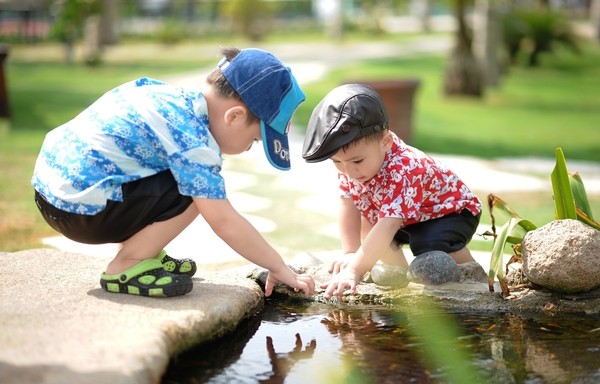
Watch bugs
This is from a course that I wrote, Anxiety in Kids. Children are fascinated by bugs, and it can be particularly fun to look at ants. They are interesting creatures and are generally safe. I am not such a bug person, but ants are pretty tame, and if need be I can check them out from a distance. I remember dropping crumbs as a child just to see ants carry them off. Checking out spiderwebs is kind of cool too, although spiders definitely do creep me out.
You can spark your child’s curiosity by wondering out loud together:
- “Where do you think that ant is going?”
- “How do you think the spider made such a big web?”
Just let your children be
Take your children outside or to the park and just let their imagination take over. You don’t need to plan anything or direct the play. Sit on a bench, enjoy the fresh air and let them explore.
Quiet Indoor Activities
Visualization and guided imagery
Mindfulness techniques actually encourage daydreaming. Visualization, or guided imagery, is one of the best ways to practice mindfulness with children.
Have children select a special memory of a time when they were happy and really felt good about themselves. For example, when they hit a home run in sports, had a special time with their grandparents, got a dog, or enjoyed a holiday. Ask them to remember as many details as they can:
a) “What were you wearing?”
b) “How did the air smell?”
c) “What could you hear?”
d) “How did you feel?”
e) “What did you see?”
Try to teach them to do this on their own. Over time, they can use it when they need to calm down, before bed, or whenever they want a quiet moment.
Make a cozy quiet corner
Get them a bean bag chair and make a calming jar with them. A special spot gives children a place to go when they want some peace. Explain to them that daydreaming and silence are important for their mental health and their learning.
Other downtime activities for kids
Other quiet activities include:
- Reading together
- Puzzles
- Playing with Legos or Magnatiles
- Coloring books
- Journaling
These work especially well as a replacement for screens. If you’re trying to cut back, here are some screen time strategies that actually work.
Create Your Own Downtime
Adults also need to daydream. When you go to sleep at night or when you are just waking, take some time for yourself to just dream. Take walks in nature without music playing in your ears. Some of my best ideas for articles have come to me on solitary rambles in my neighborhood. Mundane, repetitive tasks like gardening, cooking and folding laundry can all be used as a springboard for letting your mind wander.
When our kids see us taking quiet time, they learn that it’s a normal and healthy part of life. If you are feeling worn out, read my post on getting the quiet you need when you’re exhausted all the time.
Daydreaming is a lost art in the modern world. Let’s bring it back for ourselves and our kids. We will all be happier for it.
Frequently Asked Questions
What are good downtime activities for kids?
Simple, unstructured activities work best: cloud watching, looking at bugs, guided imagery, reading, puzzles, Legos, coloring and journaling. The goal is quiet time where children can let their minds wander.
What if my child says they’re bored?
That’s okay. Boredom often leads to creativity. Stay calm and say something like, “Let’s see what your brain comes up with.” Give them a little time before jumping in with suggestions.
Do parents need downtime too?
Yes. Adults also need time to daydream and recharge. Walks without music, quiet moments in the morning and simple chores can all give your mind a chance to rest.
Don’t forget to sign up for your free video! Summer Survival Skills for Parents