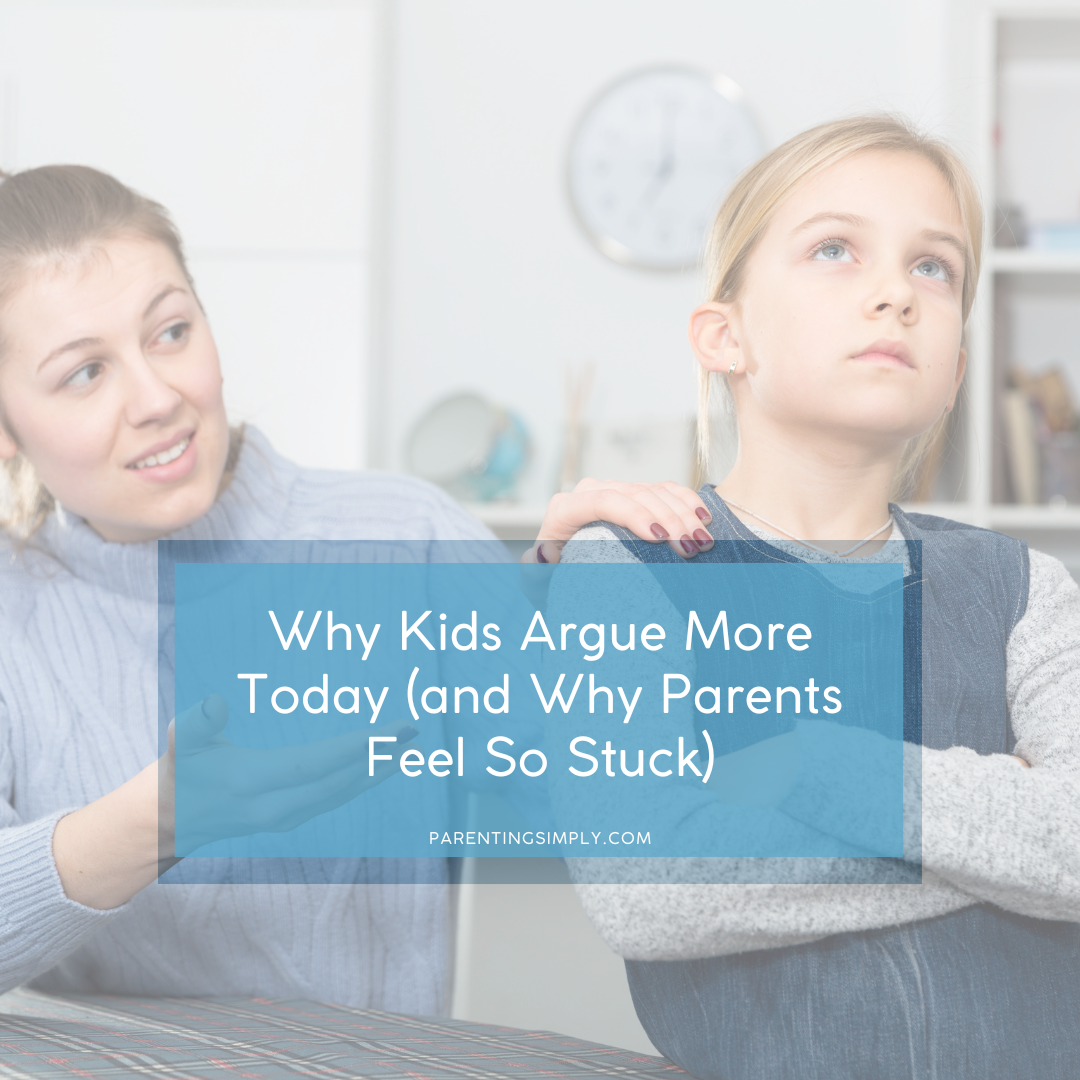
 It is often lamented that children are misbehaving more than ever before. Whining, tantrums, back talk, arguing, and refusal have become so common that many parents assume it is simply part of childhood. Parents frequently feel overwhelmed by their children’s negative behavior and struggle to set limits, follow through with consequences, and maintain routines. Even loving, thoughtful parents often admit that they feel uncomfortable asserting authority in their own homes.
Why has this become so difficult?
## The Cultural Shift Away From Authority
In her classic parenting book, *The Blessings of a Skinned Knee*, Wendy Mogel insightfully explains that many modern parents grew up with ideals rooted in egalitarianism and skepticism of authority. Adults who were raised in the 1960s, 70s, and 80s were often taught that authority should be questioned and challenged. Respect became associated with equality rather than hierarchy.
As a result, many parents today feel uneasy demanding respect or obedience from their children. They worry that setting firm limits will damage their relationship with their child or make them seem controlling. Mogel famously observed that “political philosophy is sabotaging home life.”
Jane Nelsen, author of *Positive Discipline*, also sheds light on this complex problem. She states that not only do modern adults have difficulty commanding authority, modern children do not instinctively know how to obey their parents. She attributes this to the human rights movement of the 1960s, which changed many traditional social norms. As she writes, “Adults no longer give children an example of submissiveness and obedience.” Before the 1960s, “Mom obediently did whatever Dad said…or at least gave the impression she did because it was the culturally acceptable thing to do….in the good old days few people questioned the idea that Dad’s decisions were final.”
Today, that dynamic has changed. Modern families value partnership, collaboration, emotional openness, and individuality. These are beautiful and important values. However, somewhere along the way many parents mistakenly concluded that authority itself is unhealthy.
Children, meanwhile, are absorbing the cultural message that every opinion deserves equal weight and that personal comfort should often override limits. Without realizing it, many families have drifted into homes where parents negotiate endlessly, over-explain, or hesitate to lead.
## Children Need Parents To Lead
The irony is that children do not actually want to be in charge.
Children may argue against limits, but emotionally they feel safer when adults are calm, confident leaders. A child who feels more powerful than the adults around him often becomes more anxious, not less.
At ParentingSimply.com, there is a focus on the difference between being controlling and being confidently in charge. Parents do not need to dominate their children, yell, threaten, or shame them. But children do need adults who can calmly say:
* “This is the rule.”
* “I know you don’t like it.”
* “I will help you through your feelings.”
* “The limit is still the limit.”
This is what creates emotional security.
Many parents today fall into what could be called “over-talking parenting.” Instead of confidently leading, they spend enormous amounts of energy convincing, negotiating, defending, warning, bribing, and debating. Unfortunately, the more we argue with children, the more children learn to argue back.
As Wendy Mogel points out, children are often incredibly skilled debaters. Parents become exhausted trying to reason with them and may eventually give in simply because they no longer have the energy to fight.
But children are not emotionally equipped to make many adult decisions for themselves. They cannot consistently regulate screen time, manage routines, maintain respectful behavior, or prioritize long-term goals over immediate desires. They still need adult guidance.
## Parenting With Confidence — Not Fear
One of the biggest parenting mistakes today is the belief that children will only cooperate if they fully agree with us.
A calmer, more confident approach to parenting recognizes that cooperation often comes *after* the parent has calmly taken charge — not before.
A parent does not need to convince a child to leave the park, get into bed, turn off the screen, or speak respectfully. The parent’s role is not to win a courtroom argument. The parent’s role is to lead calmly and confidently.
For example, instead of threatening or bribing, a parent might say:
> “I hope everyone can leave the park when I ask the first time. I hope we can come back tomorrow. I can only come back to the park with children who are able to leave safely and respectfully.”
This approach communicates several important messages at once:
* The parent is calm and in charge.
* The parent believes the child is capable.
* The parent is setting a clear expectation.
* The parent is connecting behavior to privilege without anger or shame.
This can be thought of as *confident expectation parenting*. Children tend to rise to the expectations we calmly communicate.
## Boundaries Reduce Anxiety
Parents sometimes fear that rules and boundaries will make children unhappy. In reality, the opposite is usually true.
Children thrive with predictable structure, routines, and clear limits. Boundaries reduce anxiety because they create a sense of order and safety. When limits constantly shift depending on a child’s mood, children often become more emotionally dysregulated.
Many difficult behaviors actually increase when children sense uncertainty in the adults around them.
Parents are often helped by focusing less on controlling every behavior and more on becoming a calm anchor for their child. A calm parent who can hold a limit without anger sends a powerful message:
> “I can handle your feelings.”
This emotional steadiness helps children develop resilience, frustration tolerance, and emotional regulation.
## Gentle Parenting Does Not Mean Permissive Parenting
Modern parents often hear messages about validating feelings, being emotionally responsive, and avoiding harsh discipline. These are positive developments. Children absolutely deserve empathy and respect.
However, somewhere along the line many parents became confused and began equating kindness with permissiveness.
Gentle parenting should not mean:
* Endless negotiating
* Fear of upsetting children
* Inability to say no
* Lack of follow-through
* Over-explaining simple rules
* Allowing disrespectful behavior
Children can experience empathy *and* limits at the same time.
A parent can say:
> “I know you’re disappointed.”
while still holding the boundary.
A parent can stay warm, connected, and compassionate while remaining firmly in charge.
In fact, children often feel most emotionally safe when parents combine warmth with confidence.
## What Children Really Need
Children do not need perfection.
They do not need parents who never lose patience or always know exactly what to say.
But they do need adults who are willing to step into the leadership role.
They need parents who:
* Set reasonable limits
* Follow through consistently
* Stay calm during emotional storms
* Avoid getting pulled into endless debates
* Model emotional regulation
* Believe that children are capable of handling disappointment
* Provide structure, routines, and predictability
Most importantly, children need parents who are not afraid to be the parent.
Modern parenting has become incredibly complicated because parents are trying to balance emotional responsiveness with authority. But authority itself is not the enemy. Healthy authority is one of the greatest gifts we can give children.
Children feel safer when adults confidently lead the way.
And when parents stop trying to control children through fear, anger, bribery, or endless negotiation — and instead lead with calm confidence, empathy, and clear expectations — family life often becomes dramatically more peaceful.