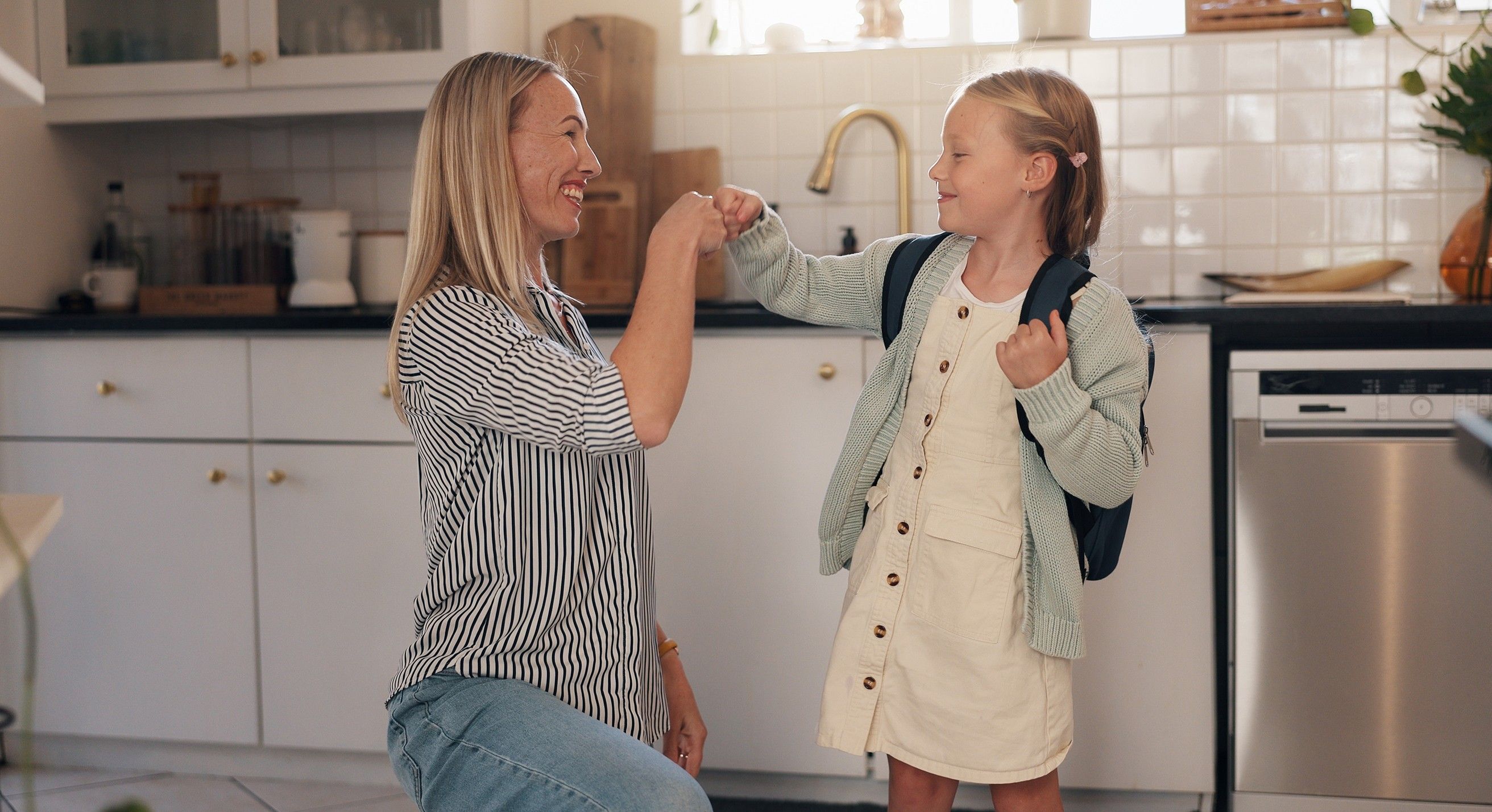
Every parent wants to raise kids who feel close to them and who take responsibility for their own actions. One of the most powerful tools we have for both is learning to empathize with your child. When we accept our children’s feelings, we show respect for their emotions, we open up the channels of communication, and we create real relationship-building moments. We also encourage children to take responsibility for their actions and come up with solutions to their everyday problems.
It sounds simple. In real life, it can be very hard.
Why It Is So Hard to Empathize With Our Children
Most of us were not raised with this kind of language. When a child is upset, our first instinct is to fix it, explain it away, or talk them out of it. We say things like:
- “You’re fine, it’s just a scratch.”
- “Stop crying, it’s not a big deal.”
- “You shouldn’t feel that way about your brother.”
We say these things out of love. We want our kids to feel better quickly. But to a child, these words can sound like, “Your feelings are wrong,” or “I’m not really listening.” When children feel dismissed, they often get louder, more upset, or they simply stop telling us things.
There is also the pressure of the moment. We are busy, tired, making dinner, or rushing out the door. Stopping to acknowledge a feeling can feel like one more task. The good news is that empathy usually takes less time than arguing.
The “Little Things” Matter Too
Many parents feel that children get upset over trivial matters: the wrong color cup, a broken cracker, a sibling sitting in “their” seat. Our instinct is to teach them not to get upset over little things.
But to a child, these are not little things. They are a big part of their world. When we accept and empathize with children even about the small stuff, we teach them that their feelings make sense and that they can come to us. This is how children learn to calm down and move on. Ironically, accepting the feeling is often what helps a child let go of it faster.
Imagine your child is crying because her sandwich was cut into squares instead of triangles.
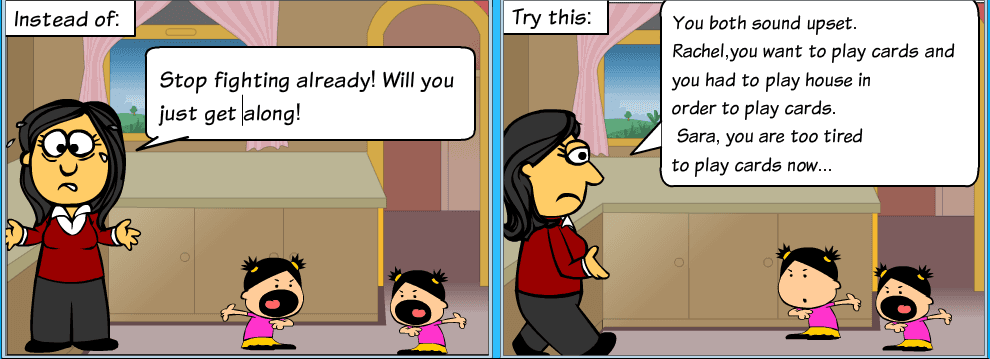
Instead of: “That’s silly. It tastes the same!”
Try: “Oh, you were really hoping for triangles. That’s disappointing.”
You don’t have to recut the sandwich. You just have to let her know you understand.
5 Skills to Help You Empathize With Your Child
Here are five practical skills you can start using today. Many of these ideas come from the classic book I love so much, which you can read more about in my favorite parenting book of all time.
1. Listen with your full attention. Put down your phone, turn toward your child, and make eye contact. Sometimes this alone is enough to calm a child down.
2. Acknowledge with a simple word. You don’t need a speech. A quiet “Oh,” “Mmm,” or “I see” tells your child you are listening and leaves room for them to keep talking and sort out their own thoughts.
3. Give the feeling a name. Children often don’t have the words for what they feel. Naming it helps them understand themselves. “You sound frustrated.” “That must have been embarrassing.” “You’re really disappointed that the playdate got canceled.”
4. Give them in fantasy what you can’t give them in reality. When you have to say no, you can still show you understand the wish. “I wish I could make it stop raining right now so we could go to the park! Wouldn’t it be great if we had a giant umbrella over the whole playground?”
5. Accept the feeling, but limit the behavior. Empathy does not mean anything goes. “You’re so angry at your sister. I won’t let you hit. You can tell her, ‘I’m mad that you took my blocks!’” All feelings are allowed. Not all actions are.
For more on why this works so well, see the power of empathy: what you should know.
How Empathy Encourages Responsibility
Parents sometimes worry that empathy will make kids soft or let them off the hook. In my experience, the opposite is true. When children feel understood, they are calmer and more open to thinking about what to do next.
Compare these two conversations about a forgotten homework sheet:
Parent: “I told you to put it in your backpack! How many times do I have to remind you?” Child: (shuts down, argues, or blames someone else)
Parent: “Oh no, you left it at home. That’s a frustrating feeling. What do you think you can do?” Child: “Maybe I can tell my teacher and bring it tomorrow. And I’ll put it by the door tonight.”
The second child is solving the problem on his own. You can read more about this in teaching kids to think about solutions.
Frequently Asked Questions
Do I need to make sure my child is happy all the time?
No. It’s not our job to keep our children happy every minute. It’s our job to help them handle disappointment, frustration and sadness. Empathy helps them get through hard feelings, not avoid them.
Can I empathize with my child and still set limits?
Yes. Empathy actually makes limits easier to hear. “I know you really want to stay up and finish the game. It’s hard to stop when you’re having fun. It’s bedtime now.” You stay kind and you stay in charge.
Does empathy work during temper tantrums?
It often helps. In the middle of a tantrum, keep your words short and calm: “You’re so upset.” “You really wanted that lollipop.” Once your child settles down, you can talk more about what happened and what to do next time.
Sometimes a child is so far gone that nothing you say seems to reach them. Even then, empathy is still doing important work, and much of that work is for you. When you have a few calm phrases ready, you are less likely to get swept up in the storm yourself. Instead of hearing yourself say, “Stop it already! Why are you crying over a lollipop?” you have something else to say: “You’re really disappointed. I’m right here.” Those words help you stay steady, and a calm parent is exactly what a melting-down child needs. Your child may not calm down right away, but you will stay in control, and that makes it easier for both of you to recover when the tantrum passes.
I hope you found this helpful.
Adina Soclof, MS. CCC-SLP